


Black PE Film: The Ultimate UV Protection and Cargo Protection Solution for 2026
In today’s era of globalization, packaging and transportation requirements have become more demanding than ever. It is no longer enough to simply protect goods from dust or scratches—businesses must now also deal with factors such as sunlight, UV radiation, and temperature, all of which can directly impact product quality.
As a result, black PE film is increasingly becoming the preferred choice across export-import industries, outdoor manufacturing, and sectors requiring specialized storage conditions. With its ability to block light, resist UV rays, and maintain high durability, this type of film is considered a comprehensive solution for protecting goods throughout storage and transportation. This article will help you better understand the structure, functions, and practical benefits of black PE film in 2026.
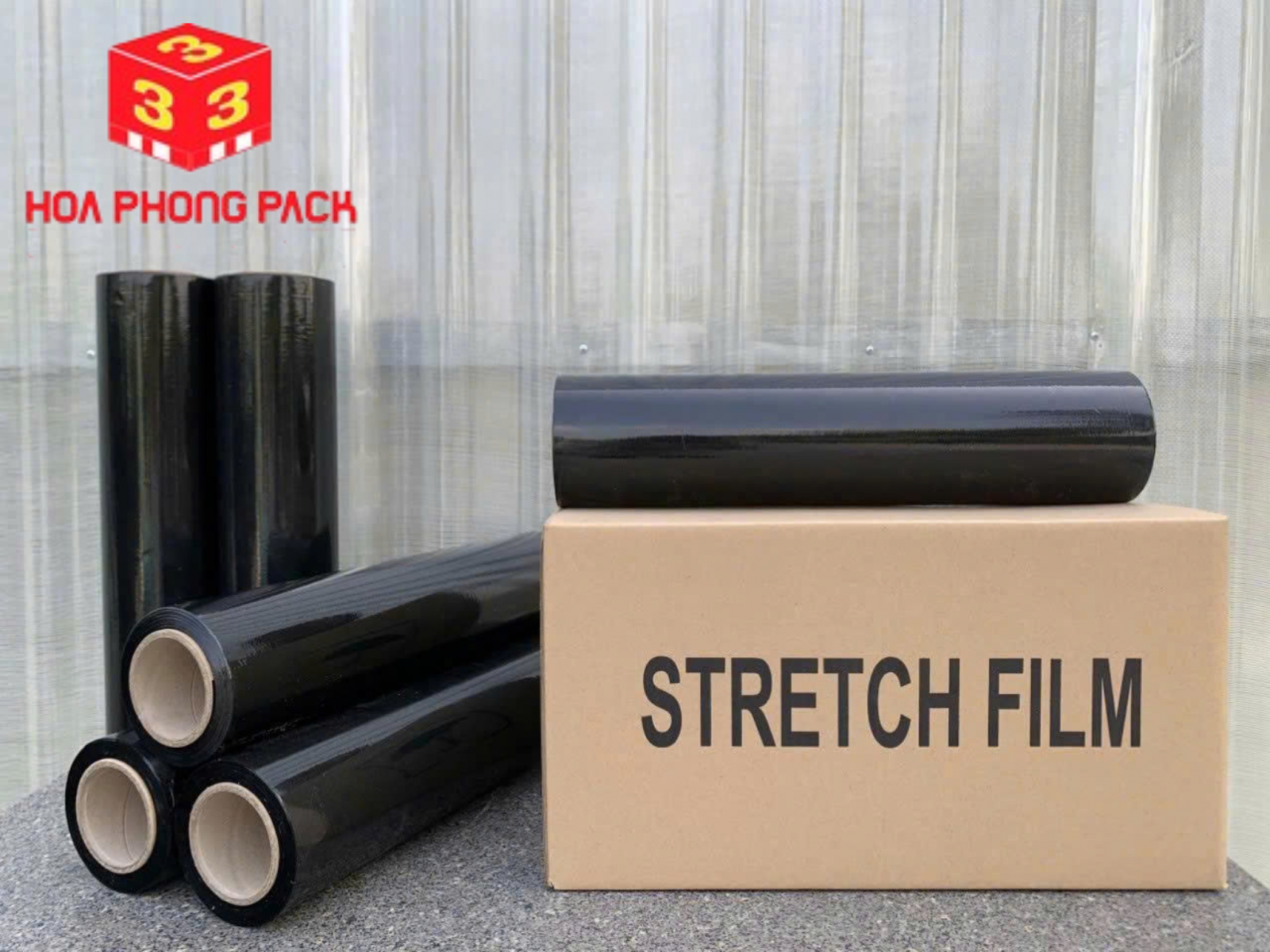
What is Black PE Film? Why is it used for UV protection?
Black PE film (Black Stretch Film) is a specialized pallet wrapping material developed from traditional PE film, but enhanced in both structure and performance. It is manufactured from virgin Linear Low-Density Polyethylene (LLDPE) resin, combined with Carbon Black pigment and UV-resistant additives in standardized ratios.
Thanks to this composition, black stretch film features a glossy outer surface, strong inner cling, and most importantly, the ability to block a significant amount of light. This helps reduce light penetration and creates an effective protective barrier for goods under various environmental conditions.
The key difference between black PE film and transparent PE film lies in light control and protection level. While transparent film allows easy visibility for inspection and barcode scanning without unwrapping, black stretch film is designed for maximum protection and security.
With complete opacity, black PE film acts as a “shield,” limiting visibility from the outside and blocking direct sunlight exposure. This makes it especially suitable for goods sensitive to heat and light, particularly during outdoor storage or long-distance transportation.
So why should black PE film be used for UV protection? Ultraviolet (UV) radiation is one of the most harmful factors affecting many materials and products. Prolonged exposure can degrade polymer structures, alter material properties, and directly impact product quality. Using black stretch film not only minimizes these effects but also helps extend product lifespan, reduce damage risks, and optimize costs for businesses.
UV Protection Mechanism of Black PE Film
To understand how a thin layer of black PE film can effectively “defeat” the strong impact of sunlight—especially UV radiation—we need to look at the scientific principles behind it, combining light physics and material chemistry. The addition of specialized additives during production transforms black PE film from a simple packaging material into a powerful protective shield in harsh environments.
1. UV Absorption Mechanism of Carbon Black
The core component responsible for the superior UV resistance of black PE film is Carbon Black—a form of pure carbon with an ultra-fine particle structure. In the plastics industry, it serves not only as a pigment but also as one of the most effective UV stabilizers.
When UV rays hit the surface of black PE film, high-energy photons collide with the material. Instead of passing through (as with transparent film), Carbon Black particles absorb nearly all of this energy. The absorbed UV energy is then converted into low-level heat and dissipated evenly into the surrounding environment.
This mechanism provides two key benefits:
- Prevents UV rays from penetrating the packaged goods
- Minimizes molecular bond degradation within materials
As a result, goods are proactively protected right from the outer packaging layer.
2. Prevention of Material Degradation
UV radiation is one of the leading causes of material aging. Prolonged exposure to sunlight can break down polymer bonds in plastics and organic materials, leading to issues such as:
- Brittleness and cracking
- Fading or discoloration
- Loss of elasticity or deformation
Black PE film acts as a protective “armor,” preventing UV rays from directly reaching the goods. This is especially important for sensitive products such as:
- Finished plastic products
- Electronic components
- Consumer goods prone to oxidation
Using black PE film helps extend product lifespan, reduce losses, and maintain original quality throughout storage and transportation.
3. Minimizing Heat Impact and Photochemical Reactions
Beyond UV protection, black PE film can also block visible light, thereby limiting photochemical reactions inside the packaged goods.
This is especially important for products such as:
- Fertilizers and soil substrates
- Post-harvest agricultural products
- Biological products
- Light-sensitive chemicals
Light exposure can trigger reactions such as photosynthesis, oxidation, or chemical changes. When wrapped in black PE film, the internal environment remains dark, stable, and less reactive, helping preserve product quality.
4. Superior Weather Resistance
A common misconception is that all PE films can be used outdoors. In reality, transparent PE film exposed to direct sunlight will begin to:
- Lose elasticity
- Reduce stretchability
- Tear or sag easily
In contrast, black PE film with UV stabilizers can withstand harsh environmental conditions such as:
- Prolonged exposure to strong sunlight at container yards and seaports
- High and fluctuating humidity
- Large temperature differences between day and night
As a result, the film maintains its tension, cling, and mechanical stability over time, ensuring cargo safety throughout the logistics chain.
Comparison: Black PE Film vs. Transparent PE Film (Heat Resistance)
A common question is: “Since black absorbs heat, will black PE film make goods hotter inside?”
The answer is: Yes—but not the full picture.
| Criteria | Transparent PE Film | Black PE Film |
|---|---|---|
| Surface heat absorption | Low – light passes through, slower internal heating | High – absorbs sunlight, heats up faster |
| UV resistance | Low – prone to aging, brittleness, tearing | High – thanks to Carbon Black, more durable |
| Cargo protection | Light penetrates, causing fading and overheating | Blocks light but may transfer heat if tightly wrapped |
| Structural durability | Quickly loses elasticity under heat | Maintains strength and cling in harsh conditions |
| Ideal applications | Indoor storage, short-term transport, visibility needed | Outdoor storage, long-distance shipping, high security |


